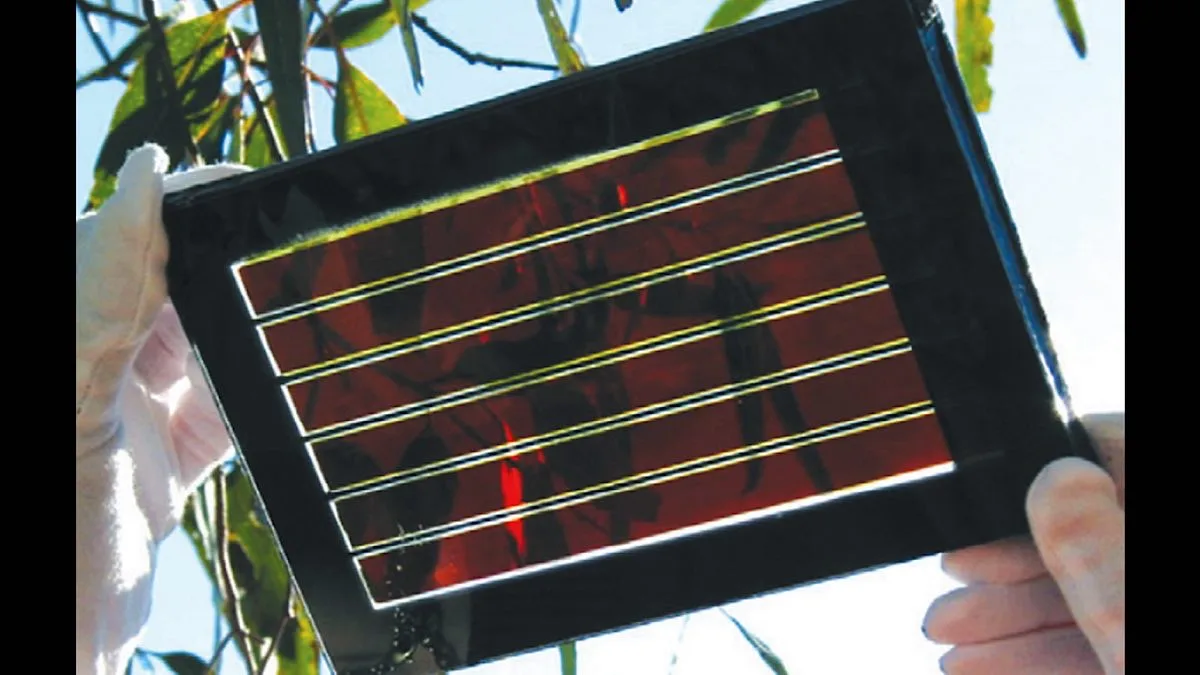
Researchers at the Central University of Jharkhand (CUJ) have developed a dye-sensitized solar cell using extracts from the Gulabbas or Four O’Clock flower, a plant commonly found across Jharkhand and other parts of India.
The research was conducted by the Department of Energy Engineering at CUJ using petals of Mirabilis jalapa L., locally known as Gulabbas, Sandhya Malati or Sandhya Phool. The extract was used as a sensitizer in Dye-Sensitized Solar Cells (DSSCs), also known as Grätzel cells, which convert sunlight into electricity.
Advertisement
The study, titled “Harnessing natural dyes from Mirabilis Jalapa flower for dye-sensitized solar cells: A combined experimental and theoretical approach,” has been published in the Journal of Power Sources.
The research team included Prashant Kumar, Anshu Kumar, Ayushi Pareek, Enamul Haque and Anik Sen under the supervision of Dr Basudev Pradhan.
According to the researchers, the petals were collected during evening hours when the flower blooms. The extracted dye was used to prepare the photoactive layer of the DSSC.
Dr Pradhan said the team achieved a power conversion efficiency (PCE) of 0.61 per cent with stability of up to 250 hours under experimental conditions.
“We analysed the dye and its components to understand their correlation with photovoltaic performance. Quantum chemical calculations of six major dye components showed theoretical efficiency ranging from 13.9 per cent to 20.8 per cent for individual components,” he said.
The researchers said the extract dissolves in ethanol and bonds with titanium dioxide nanoparticles used in the photoanode of DSSCs.
Dr Pradhan said non-edible natural dyes could serve as alternatives to synthetic dyes used in solar cell technologies.
“Our theoretical calculations show efficiency can reach 13.9 to 20.8 per cent using individual dye components of this extract. The flower grows throughout the year and is widely available. It can be compared with Ruthenium dye, which has achieved around 13 per cent efficiency but is hazardous,” he said.
The researchers said Mirabilis jalapa is also used in traditional medicine for anti-inflammatory and antimicrobial purposes. Its leaves, roots and extracts are used for treating wounds, skin infections, muscular pain and digestive disorders.
They said further work is required to improve extraction methods and device quality parameters to enhance solar cell performance.
The researchers added that the study indicates the possibility of developing solar energy devices using plant-based materials sourced from non-edible natural resources.